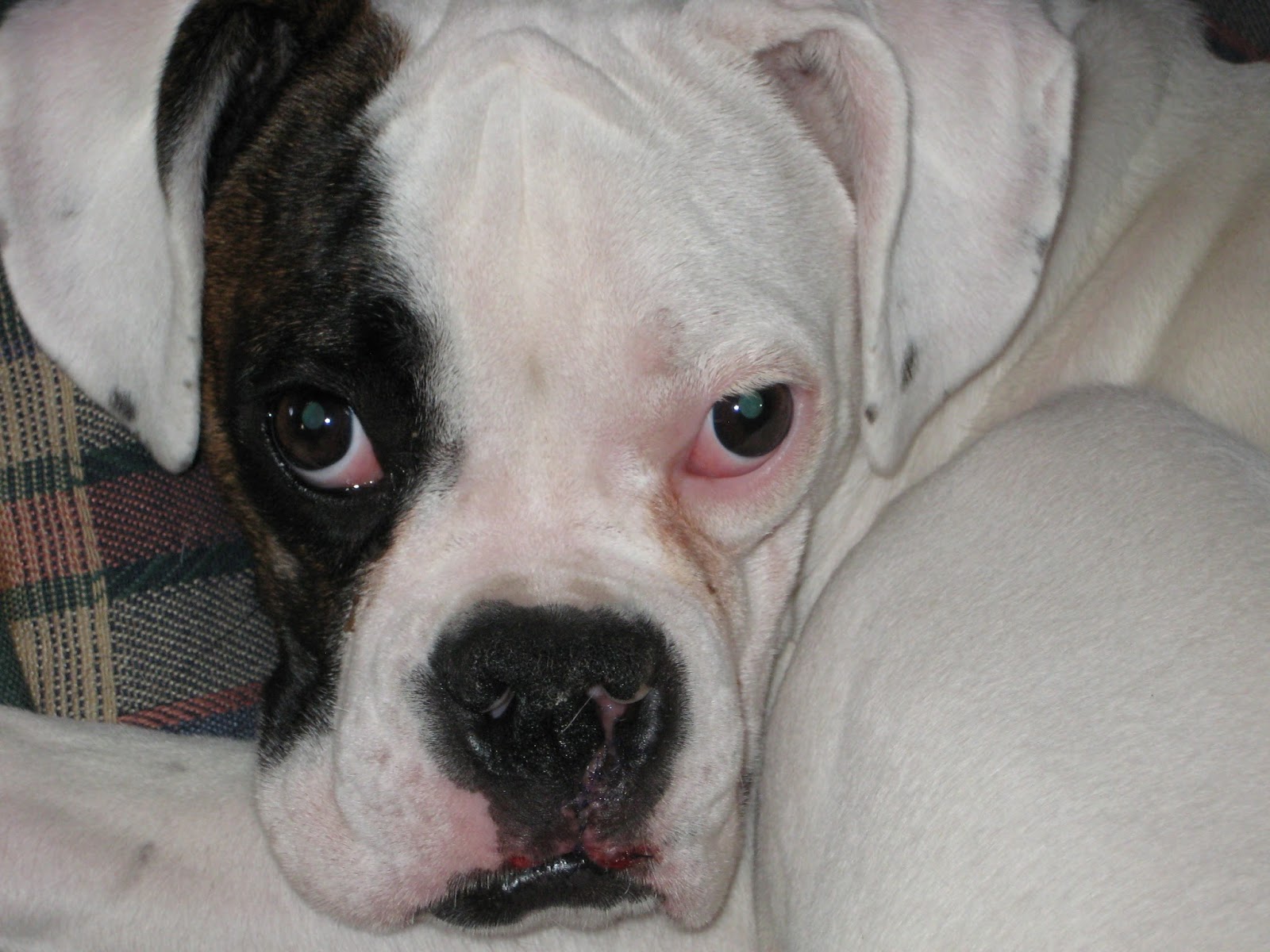
We got news this last week about our oldest boxer, Lady, who will be 10 years old in February (pictured with her first litter of puppies in the large photo above). We noticed that she started drinking excessively a couple weeks ago. She has also gained 10 pounds since July, and sometimes pants while resting. Something was up, so we had some blood work and urine tests done. I thought it could be her kidneys; they were fine, but the liver function was down. Our vet concluded that she has Cushing's Disease.
Cushing's Disease (hyperadrenocorticism) is a disease that can occur in both humans and in a variety of dog breeds (rarely cats), and is caused by an a small tumor either in the pituitary gland or in the adrenal glands, which in turn cause an overproduction of cortisol in the body. Some symptoms of Cushing's Disease include: excessive thirst, increased hunger, pot-bellied abdomen, weight gain, hair loss, excessive panting, changes in coat appearance, lack of energy, and darkening of skin. Unfortunately, there is no cure for Cushing's Disease, and it is progressive in nature. Medications are available to help treat the symptoms and to make the dog more comfortable. Those medications can have very serious side effects, so the proper dosage must be accurately determined and closely monitored by the veterinarian. With older dogs, like Lady, those medications generally will not prolong life. For more reading on Cushing's Disease and dogs, click
here.
So begins the talks about what is best for Lady. With the average life span for boxers at 10 years, she's "about that age." Our other boxers have all been put down when they are about 10 1/2 years old. She has been an extremely healthy dog; the only thing she's ever been to the vet for (besides her annual checkups) was when she was spayed. For now, she is doesn't have the energy she once had, but still dishes out lots of kisses, and her tail is still wagging. As long as it still wags, life is good.